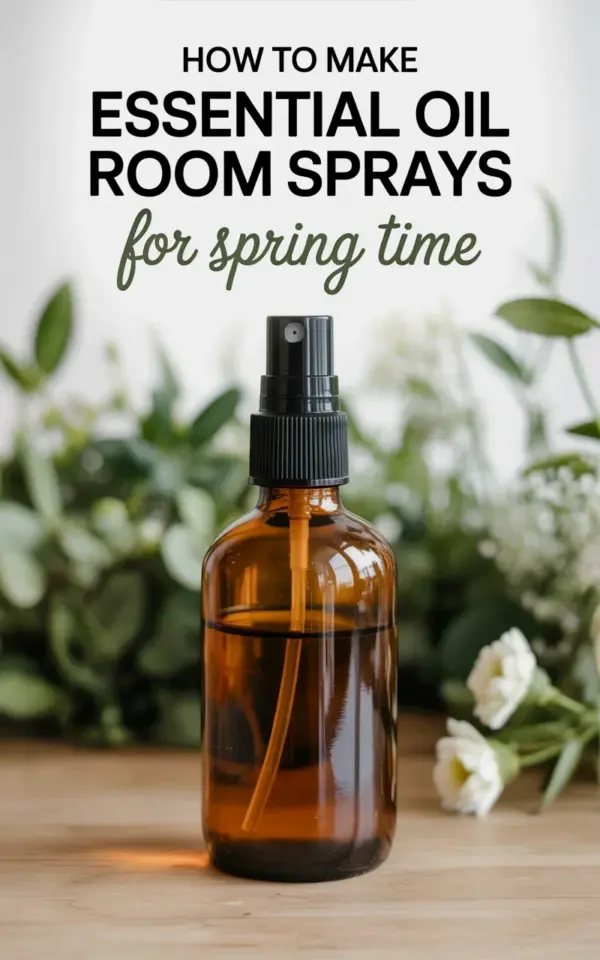
The photo above shows a clear liquid in an amber glass spray bottle on a light wooden surface. That clarity is exactly what most DIY room spray tutorials fail to achieve, because they skip the one ingredient that makes essential oil room sprays work. Water and oil don’t mix, so without a dispersant, your spring scent sits on top of the water, and every spritz is either weak or greasy. Don’t be that person.
I have made that mistake more times than I care to admit. Around 2022, I was convinced I could just shake the bottle before spraying, and it would be fine. It wasn’t fine. The water hit the air as a fine mist, but the oil stayed behind as a film on my couch cushions. So here’s the straightforward, two minute method I use now. It works for spring flower blends, citrus mood boosters, all of it.
Why Water and Oil Need a Dispersant
Water and oil don’t mix. You know this from salad dressing, from the puddle after rain, from the way dishwater looks on a bad day. Essential oil room sprays have the same physics problem. Without a dispersant, the oil globs together and either sits on the surface or clings to the glass when you shake it. Then, when you spray, you get water and a few concentrated drops of oil that may actually stain fabric.
I’m not gonna lie, I skipped the dispersant for a long time. I thought my aggressive shaking would be enough. It wasn’t. The first few sprays smelled great, then the scent died, and I was left with a bottle of cloudy water that smelled like nothing. The fix is a simple solubilizer called Polysorbate 20 or a product like Solubol. You add it to the bottle before the water, and it changes everything.
The 2 Minute Base Recipe
Here’s the recipe I use for every homemade room spray. You’ll need a 4 ounce amber glass bottle, about 25 drops of your chosen essential oils, 1/4 teaspoon of
Leave a Comment