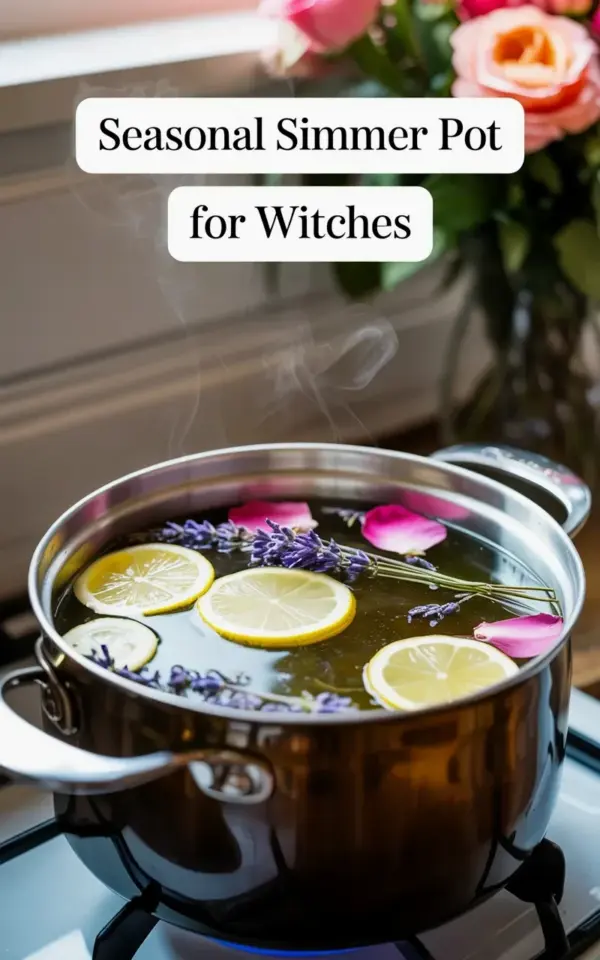
There’s a dark pot on my stovetop right now, and it’s barely even simmering. A few lemon slices are floating around with lavender sprigs and some pink rose petals that I actually picked from the garden yesterday, and the second that steam starts to curl up from the surface, the whole room shifts. It smells calm and warm and just expensive enough to feel like a splurge, except the entire batch of stovetop potpourri cost me basically nothing. That’s the real secret of a good homemade simmer pot: it’s the cheapest air freshener you can make, but it feels like a luxury.
Why a Simmer Pot Beats Your $30 Candle Every Time
Look, I love a good candle, but I don’t love paying thirty bucks for something that vanishes in a week. A simmer pot is just water, fruit, herbs, and heat. That’s it. You get that same cozy, throw-the-blanket-over-your-legs feeling without any of the artificial stuff or the fading top notes. Honestly, the scent from a simmer pot gets stronger as it steams, and it spreads through the kitchen and into the hallway like it owns the place.
And because it’s just water and plant material, you aren’t burning anything or releasing petroleum-based fragrance into your air. If you care about natural home fragrance or you’re trying to cut out unnecessary chemicals, this is the easiest swap you’ll make all winter. Just don’t forget to check the water level every hour or so. You’ll be fine.
The Exact Lemon Lavender and Rose Simmer Pot Recipe I Use
You need a medium pot, a big one. I use a dark enameled cast iron pot because it holds heat well, which is exactly what you want for gentle steaming. The one in the photo is me mid-simmer, with lemon slices, purple lavender sprigs, and pink rose petals all riding the surface of the water. You can see the wispy steam rising up, and there’s a vase of coral-pink roses blurry in the background, which is just my kitchen living its best life.
Here’s the recipe that I keep coming back to:
- One lemon, sliced into rounds. Thin is better, but don’t stress about perfection.
- A small handful of fresh lavender sprigs, around a third of a cup if you’re measuring.
- A generous handful of rose petals, anywhere from a quarter to a half cup, depending on what your garden gives you.
- Six cups of water. Cold tap water works fine, no need to be precious about it.
- And if I have a few drops of vanilla extract that are about to expire, I’ll toss them in too.
Bring it to a boil, then drop the heat to low and let it sit there, barely bubbling. You should see steam rising, not a rolling boil. That’s it. The lemon and lavender recipe is an instant classic because it doesn’t smell like a cleaning product; it smells like something that’s actually simmering on the stove, which is honestly the whole point.
More Homemade Simmer Pot Ideas for Different Moods
If you want stovetop potpourri that fits a specific vibe, change the fruit and herbs. You don’t need a different technique, just a different shopping list or garden basket. I keep a small jar of dried orange slices in my pantry for exactly this purpose, and I use them more than I use candles.
Try a few of these budget-friendly mixes when you’re ready to branch out:
- Orange slices, cinnamon sticks, and a star anise pod for that winter-market energy.
- Apple peels and a spoonful of brown sugar for something that smells like dessert without the calories.
- Fresh rosemary, a few sprigs of thyme, and lemon zest when you want something clean and almost savory.
- A little leftover cranberry sauce (not the canned jelly, the real kind) with orange peel and cloves. That one’s weirdly good.
And if you happen to have a bunch of herbs that are about to go limp in the fridge, use them. That’s exactly what this is for. It’s not a science experiment; it’s a method for not wasting food and making your apartment smell like someone who cooks, even when you’re just reheating leftovers. Any kind of fruit and herbal combo will do the trick. The water is the air freshener, the plants are just the personality.
How to Get More Out of Your Stovetop Potpourri
The same batch can last you a couple days if you handle it right. After the first hour, the scent starts to fade, so you just add more hot water to the pot and give it a stir. Do that every few hours and you can keep the steam going all day long. I usually start a batch in the morning before I sit down to work, top it off at lunch, and let it finish off in the evening when I’m reading on the couch. The scent gets lighter over time, but it never gets weird if you keep topping it up.
Now here’s the part that nobody mentions. After the first day, the lemon slices will look sad and the lavender will be completely spent. You can strain the liquid, save the ingredients in a freezer bag, and use them one more time the next day with fresh water. They won’t be as fragrant, but they’ll still do something. I’m not gonna lie, I have squeezed a third and sometimes a fourth day out of a decent batch, especially in the dead of January when the only thing going on is the steam from this pot and the snow piling up outside the window.
The Honest Truth About Simmer Pot Safety
You cannot just set this on the stove and leave the house for three hours. I know that’s not the answer you want, but I’m not going to pretend otherwise. The water will evaporate, the pot will get dry, and you will come home to a burned pot and an ugly smell. So keep the heat low and stay nearby, or at least within earshot. If you’re the kind of person who gets distracted easily, set a timer on your phone for forty-five minutes. That’s what I do, because I’ve definitely gotten lost in an article and come back to a pot that was way too close to empty.
Also, don’t cover the pot with a lid. You want the steam to escape and fill the room, not collect and drip back down into the water. Leave the lid off and consider opening a window for just a moment if the air starts to feel heavy. You’ll end up with a much fresher scent and less condensation on your kitchen cabinets.
A Few Little Extra Twists for Your Natural Home Fragrance Game
Once you get comfortable with the base recipe, start messing around with it. A couple of drops of essential oil can be added to the water right at the beginning, but don’t overdo it; the whole point is that this should feel subtle and natural. A splash of apple cider vinegar is surprisingly not gross and can really make the citrus pop. And if you have a bouquet of roses that’s starting to droop, toss the good petals into the pot and put the stems in the compost. That’s genuinely one of the best uses for flowers that nobody wants to throw away.
The water temperature changes everything, too. A low, gentle steam gives you a softer scent that works for background ambiance. If you turn it up just a little and let tiny bubbles break the surface, you get a stronger hit of fragrance that fills the whole apartment, which is what you want on a freezing day. I’ll do a hot boil for the first ten minutes and then dial it back to a whisper. That’s my little trick, and it works consistently.
Anyway, the next time you are about to buy another bottle of air freshener or melt another overpriced wax cube, just slice up a lemon and go raid your garden or your spice rack. One lemon, a couple sprigs of lavender, a few petals from your roses or even a store-bought bouquet that’s past its prime, and six cups of water. You will have a steaming, fragrant pot that makes your whole place feel more alive, and you’ll have spent less than a dollar. That’s the kind of budget air freshener I can get behind.
Leave a Comment