Your house has a smell right now. Walk in the front door after being out for a few hours and take a big sniff, that’s what guests notice within three seconds. The good news is you don’t need a drawer full of expensive candles or a subscription to some fancy fragrance service to fix it.
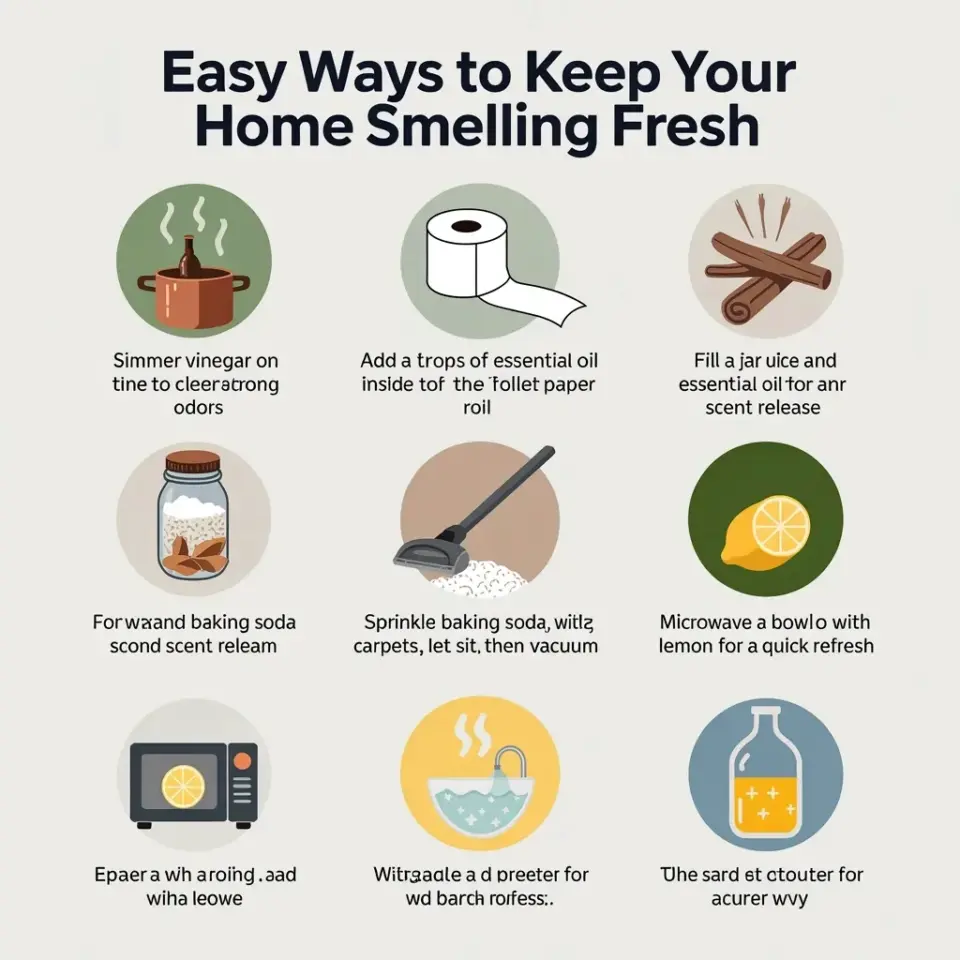
I’ve been testing budget home fragrance ideas for years, and honestly, most of the expensive stuff is just a re-packaged version of what you can make with things already in your pantry. The infographic that inspired this post shows nine circular icons in a 3×3 grid, each one a simple solution for a common odor problem. Let’s break down the best ones, add a few of my own favorites, and get your home smelling fresh on a budget without the headache.
## Simmer Vinegar on the Stove to Clear Strong Odors
The first icon in that graphic shows a steaming pot with a bottle beside it. This is the heavy hitter for post-cooking chaos. If you just fried fish or made broccoli cheddar soup, the air in your kitchen is basically a crime scene. Here’s the fix: fill a pot with two cups of water and a half cup of white vinegar, add a few lemon peels or a cinnamon stick if you have them, and let it simmer on low for an hour.
Vinegar doesn’t just cover up smells, it actually neutralizes the alkaline compounds causing them. The scent of vinegar dissipates quickly, leaving behind clean, neutral air. It’s the cheapest air purifier you will ever own. Just don’t walk into the kitchen while it’s actively steaming if you’re sensitive to the smell of pickles. It’s fine, but it’s there.
## Add a Few Drops of Essential Oil to Toilet Paper Rolls
The second icon in the infographic is a toilet paper roll with essential oil drops. This is the laziest hack on the list, and I mean that as a compliment. Before you put a new roll on the holder, put three to four drops of your favorite essential oil directly onto the cardboard tube. Peppermint, eucalyptus, or lemongrass work wonders here.
Every time someone spins the roll, the oil gets activated and releases a tiny burst of scent. It’s not overwhelming, it’s just enough to keep the bathroom feeling fresh between cleanings. You can also add a drop to the inside of the toilet paper tube in the guest bath before company arrives. It’s a passive system that requires zero effort after the initial setup.
## Make Your Own Baking Soda Carpet Freshener
Baking soda sits outside the infographic, but it’s the backbone of any natural home fragrance routine. The sodium bicarbonate absorbs odors rather than masking them, which is what you actually want. You can buy commercial carpet powders that smell like a chemical factory, or you can make your own in about two minutes.
Here’s my standard mix:
– 1 cup of baking soda
– 15 drops of lavender or orange essential oil
– A half teaspoon of ground cinnamon (omit this if you have pets, it can irritate their noses)
Shake it all in a jar, sprinkle it over your rugs, let it sit for 30 minutes, and vacuum. The carpets come out smelling softly of whatever you chose, and your vacuum bag doesn’t smell like a dust bomb afterward.
## Clear Pet Odors with a Vinegar and Water Spray
Dog smells are stubborn. They get into the couch, the dog bed, and that one spot on the carpet that no one talks about. Commercial enzyme cleaners are great, but they’re expensive. The infographic doesn’t mention this one, but it should. Mix one part white vinegar with two parts warm water in a spray bottle.
Spray the affected area lightly, don’t soak it, and let it air dry. The vinegar odor vanishes as it dries, taking the pet smell along with it. For a dog bed, I like to use a spray bottle with a few drops of tea tree oil added (careful, tea tree is toxic to cats, so keep it away from their bedding). A quick spritz once a week keeps the whole room fresher.
## Deodorize Your Garbage Disposal with Citrus Peels
This is one of those tips that feels too easy to actually work, but it absolutely does. Save your lemon, lime, and orange peels in a bag in the fridge. Once you have a decent pile, stuff them into the garbage disposal and run cold water while you turn it on. Grind them up for about thirty seconds. The citrus oils cut through the grease and leave the kitchen smelling like a margarita.
You can also toss in a few ice cubes afterward to sharpen the blades. It’s a twofer that costs nothing because you’d throw the peels away anyway. One snootful of that and you’re done. Just don’t do what I did once and jam an entire grapefruit peel in at once, it clogs and then you’re sticking your hand in there fishing out wet pulp. Not a great Saturday.
## Keep the Fridge Neutral with an Open Box of Baking Soda
You know that weird smell when you open a fridge that’s mostly condiments and sadness? An open box of baking soda handles it, but you actually need to replace it every month. Most people toss it in and forget about it for a year, which means they’re just storing a lump of odor absorbing failure.
For a stronger approach, wipe down the shelves with a cloth dipped in warm water and a splash of vanilla extract instead of soap. The vanilla scent lingers for days and it’s food-safe. This is a trick my grandmother used, and it’s honestly better than anything I’ve found in a cleaning aisle. It’s one of those small details that makes guests wonder why your home always feels so put-together.
## Use Houseplants as a Natural Air Filter
The infographic has a muted color palette of greens, browns, and blues, and the green is there for a reason. Spider plants, peace lilies, and snake plants all work hard to filter out common household toxins. They don’t smell on their own, but they keep the air from getting stale in the first place.
Stale air is often the real problem when a room smells “off”. Open a window for ten minutes every morning, even in winter, and let the plants do their thing. Airflow is the original air freshener. It’s free, it’s effective, and it doesn’t give you a headache from synthetic fragrance compounds.
## Refresh Your Linens with a Simple Linen Spray
The sixth icon in that grid is a spray bottle, and I have a whole routine around this one. Fill an eight-ounce spray bottle with distilled water and add ten drops of lavender essential oil and five drops of cedarwood oil. Shake it before every use, that’s non-negotiable because the oil separates from the water quickly.
Give your pillows and duvet a light misting about fifteen minutes before bed. The scent is calming without making the room feel like a spa that’s trying too hard. You can also spray the curtains and the upholstered headboard. This is the easiest way to make your bedroom feel like a retreat without buying a new thing.
The budget hack here is that the same bottle of essential oil lasts forever because you’re using so little at a time. A fifteen dollar bottle of lavender will give you about a year of linen spray. Compare that to the cost of buying a new room spray every few weeks.
## The Bottom Line on Natural Home Fragrance
You do not need a pantry full of cleaning products to keep your home smelling fresh. A bottle of vinegar, a box of baking soda, some citrus peels, and a few essential oils are genuinely enough to handle 90 percent of household odors. The best part is that these methods are safe for kids and pets, assuming you skip the toxic essential oils for cats, and they cost pennies per use.
I keep a small basket in my utility closet with all of these supplies in one place. That way, when I notice a funky smell, I can fix it immediately instead of adding it to a mental list of chores I’ll ignore until guests are on the way. Start with the simmer pot of vinegar tonight. It’s the highest impact, lowest effort trick in the entire playbook. And if you want to save this idea for later, pin the infographic from this post, it’s a great visual reminder to have on hand.
Leave a Comment