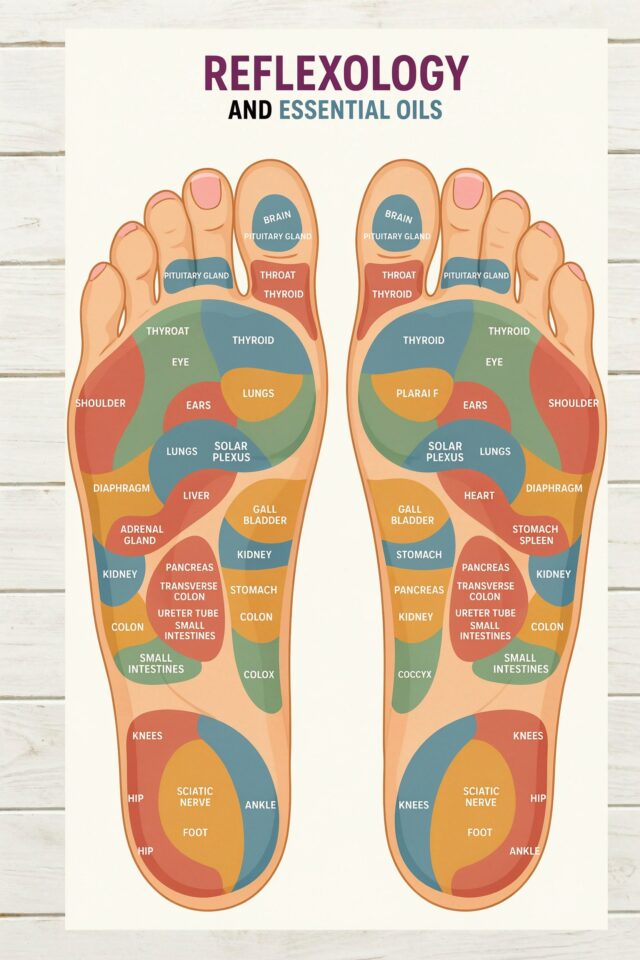
Why I Finally Created a Practical Reflexology and Essential Oils Resource Card
I used to rely on memory when I gave myself foot massages, but I always forgot which pressure point matched which essential oil. That is why I designed a simple reflexology and essential oils resource card that I could print and keep near my couch. This printable aromatherapy guide became my go‑to for targeting foot pressure points without fumbling through books or phone apps. It saved me time and helped me actually remember what worked for relaxation versus tension headaches.
What a Printable Aromatherapy Guide Actually Looks Like
My card is a single page that shows a basic foot diagram with numbered reflex points on the sole. Next to each number I list one or two essential oils that I have personally found effective. For example, the solar plexus point gets lavender or marjoram, while the sinus area calls for peppermint. The whole thing fits in a small plastic sleeve that I tuck inside my slipper basket. If you want a visual reference that does not require Wi‑Fi or a glowing screen, this type of printable guide is exactly what you need.
How I Found the Right Essential Oils for Foot Massage Points
I tried a few “best oil” lists online, but most felt generic. After a month of testing, I landed on a short list that actually shifted how my body responded. For a calming foot massage routine, lavender oil is non‑negotiable. It works on the inner arch and the heel area that connects to the lower back. Peppermint oil, on the other hand, I reserve for the balls of the feet and the outer edges because it wakes up tired arches. I keep a small bottle of each in a wooden tray next to my chair.
- Lavender – best for reflex points linked to the spine, shoulders, and solar plexus.
- Peppermint – ideal for sinus, head, and upper back reflex zones.
- Frankincense – my choice for the pituitary and pineal points (tips of the big toes).
- Sweet orange – great for the stomach and digestive reflex area near the middle of the arch.
Step by Step: Using the Resource Card During Self‑Care
I prop the card on a pillow or tape it to the wall at eye level. Then I warm a carrier oil (jojoba or fractionated coconut) in my palms and add one drop of the chosen essential oil. I start at the heel and work up to the toes, pressing each reflex point for about five seconds. The card reminds me which oil to use for which zone, so I do not have to stop and guess. After a full foot, I switch to the other side. The whole process takes around twelve minutes.
If I feel a tender spot, I pause and apply gentle circular pressure while breathing deeply. That extra moment often releases a surprising amount of tension. The resource card also has a small note at the bottom reminding me to drink water afterward to flush out any released toxins.
The Lavender and Peppermint Combo That Changed My Evening Routine
My absolute favorite pair is lavender and peppermint. I apply lavender first to the inner arch and heel area, then switch to peppermint for the ball and toe pads. The contrast between cool peppermint and warm lavender creates a soothing sensation that tells my brain the day is over. I have started doing this before bed instead of scrolling through social media. The result is a calmer mind and feet that do not ache in the morning.
I also discovered that using a drop of frankincense on the big toe points (the pituitary and pineal gland reflexes) helps me feel grounded. That particular tip came from a reflexology book I borrowed from the library, but it fits perfectly on the aromatherapy tip section of the card.
Practical Advice for Keeping Your Printable Guide Useful
Print the card on cardstock so it does not curl up after a few uses. Better yet, slide it inside a clear sheet protector or laminate it at a copy shop. I keep mine near my foot bath, but you could also tape it inside a cabinet door. If you are traveling, a folded copy fits inside a makeup bag. The printable guide is not meant to be fancy. It is just a tool that helps you stay consistent with reflexology and essential oils until the points become second nature.
Another small trick: write the oil name in pencil next to each point. That way you can swap oils if your preferences change without reprinting the whole card.
What Surprised Me After Six Months of Using This Card
I expected better relaxation, but I did not expect a noticeable improvement in my sleep quality. My partner even commented that I stopped tossing and turning. I also found that my digestion felt less sluggish when I used sweet orange oil on the middle arch reflex. Little shifts like that kept me motivated to keep the card visible.
The resource card also helped me share reflexology with friends without needing a long explanation. I just hand them a printout and a bottle of oil. They can try it themselves and see if it clicks. That social aspect became an unexpected bonus.
Leave a Comment