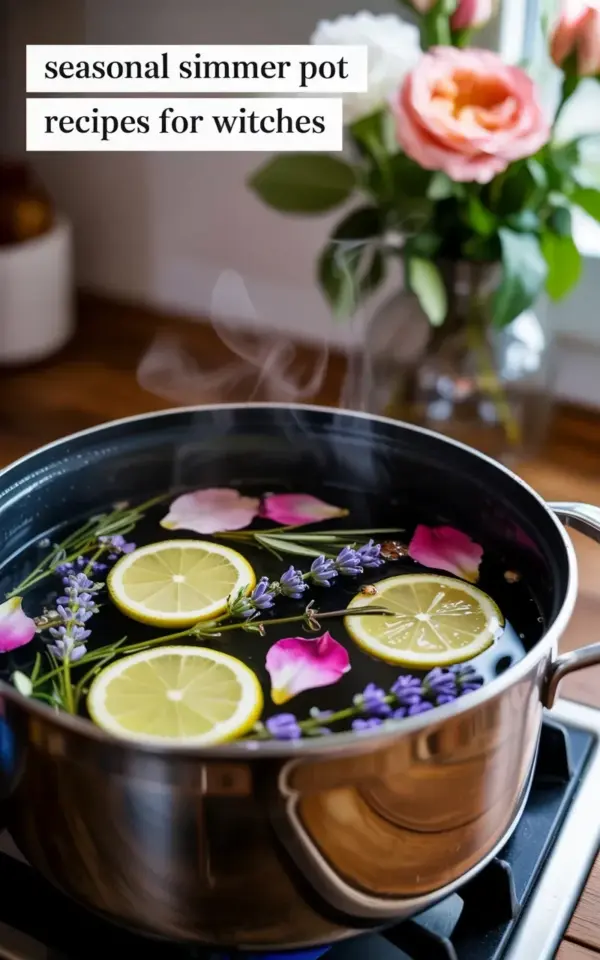
There’s something quietly magical about a dark pot bubbling away on the back burner, especially when the steam carries the scent of lemon, lavender, and rose petals into every corner of the house. Right now, I have one going on my stovetop, an old enameled Dutch oven that has seen better days but works perfectly for this. The photo at the top of this post shows exactly that moment, the wispy white vapor curling up from the liquid, floating slices of citrus, and those delicate pink petals catching the natural light. It’s a simple simmer pot recipe, but it has genuinely become my favorite weekly ritual for creating cozy home vibes.
I used to be a candle person, but I got tired of the artificial perfume that lingers long after you blow the flame out. There’s no fake stuff here, just real ingredients doing real work. The scent is soft and floral, not at all like a cleaning product, and it just makes the air feel calmer, almost immediately. Let me show you exactly how I do it.
## Why a Stovetop Simmer Pot Beats Candles Every Time
Candles are lovely, sure, but they have that whole open-flame thing going on, which honestly makes me a little nervous with my curious cat patrolling the counters. A stovetop simmer pot is just water, fruit, and botanicals gently heating, so there’s no smoke, no soot, and no risk of knocking over a candle. You get a strong, consistent fragrance for hours without having to babysit a wick or worry about scent fatigue hitting you like a wall.
Here’s the thing about simmer pots: they use the natural essential oils in the ingredients themselves. When you heat citrus peels and herbs in water, the steam carries those aromatic molecules through the air, and it just works. It’s the oldest trick in the book, honestly, our grandmothers did this before Glade ever existed. Plus, you get to reuse your ingredients for a couple of days if you keep them in the fridge overnight.
## The Exact Simmer Pot Recipe I Use Every Weekend
Ok so, this isn’t a rigid science. The ratios are forgiving, and you should really just use what looks good at the store or in your garden. I’ll give you my standard go-to combination, the one that fills the whole apartment with that signature lavender and rose scent.
Here’s what I toss into the pot:
– **One lemon**, sliced into thin, even rounds (a mandoline helps, but a sharp knife is fine)
– **Three to four sprigs of fresh lavender**, stems and all, give them a little squeeze to help release the oils
– **A generous handful of dried rose petals**, the pink kind from the tea shop, or about two full blooms if they’re fresh
– **Several slices of fresh ginger**, optional but a tiny kick adds a nice warmth to the whole profile
– **Cold water**, enough to cover everything by a few inches
I put everything in the pot, fill it with water, and bring it to a gentle simmer over medium heat. Then I turn it down to the lowest setting possible. Just a few lazy bubbles rising to the surface, not a rolling boil, because a hard boil will burn off the water too fast and make you have to babysit it constantly.
## How Long to Simmer for Maximum Scent
The house usually starts smelling incredible within ten minutes, which is the best part of this whole process. I let the pot go for about an hour on that low heat to really get the lemon, lavender, and rose petals to release their magic into the steam. You don’t need to keep it simmering all day long, unless you want to, but a solid hour does the trick for me.
Speaking of topping it off, you will need to add more water as it evaporates. The scent weakens when the liquid level gets low, and the botanicals can start to scorch on the bottom of the pan, which is a pretty terrible smell that takes forever to clean off. I keep a kettle on standby and just add a cup of hot water every thirty minutes or so to keep the levels up.
## What Actually Worked for Me, and What I Changed
My first attempt was a bit of a mess, flop even. I used whole lemon slices with the pith on, which is fine for the oils, but they started to break down and float around weirdly. The photo of my current pot shows the slices floating nicely, but honestly, for the strongest fragrance, the real MVP is the lemon peel. I’ll often just use a vegetable peeler to strip the zest off in big curls.
One seriously important tip: never walk away for a long stretch with the heat too high. You know how you get distracted with laundry or emails, and the kitchen becomes a steam room? Yeah, that was me, and the water level dropped fast. It turned into a burnt lemon smell that clung to the kitchen for days. Learn from my mistake. Low heat, frequent water checks. Also, the addition of a few drops of vanilla extract toward the end is a weirdly good twist, but I didn’t add that today because the photo already has enough going on.
## Adding Other Natural Ingredients for a Custom Scent
This particular combo of lemon, lavender, and rose petals is my favorite neutral cozy scent, but the simmer pot world is your oyster. Rosemary and orange peel with a cinnamon stick makes the house smell like a holiday market. A few sprigs of mint and some lime slices give a clean, fresh vibe that’s perfect for springtime.
Here are a few other combos I’ve tested personally:
– **Eucalyptus and whole peppercorns**, to open the airways when the seasons change
– **Apple slices and vanilla**, for a sweet, dessert-like aroma without any sugar
– **Pine needles and orange peel**, a winter classic, though it can be a bit resinous
The fun part is that you can just throw things together, sniff the steam, and adjust. The roses might be a bit subtle if your sense of smell is out of whack, but the lavender tends to be the dominant note in the mix.
## Save My Best Cozy Home Vibe Tips for Leftovers
The cleanup is comically simple, actually. Once you’ve simmered it all afternoon, let the pot cool down completely, then just strain the soggy ingredients into the compost bin. Give the pot a quick swish with soapy water, and you’re done. I bag up the spent lavender stalks and rose petals and toss them into the compost pile in my tiny garden.
If you want to make a simmer pot last a little longer, you can refrigerate the liquid and botanicals overnight. The next day, just add more water and a few fresh lemon slices, and the scent will be nearly as strong. Look, sometimes I just want to squeeze a few more hours out of a good thing, especially if I have strong lavender sprigs that still have some to give.
At the end of the day, the ritual is as comforting as the scent itself. The sight of that dark pot with the steam rising, the pink and coral roses in the vase behind it getting a little out of focus in the background, it all just signals that it’s time to slow down. It’s a tiny, quiet act of caring for your space, and the payoff is a home that feels genuinely alive. Try this simmer pot recipe on your next slow afternoon, and see if the whole house just settles into the calm with you.
Leave a Comment